
 Al Khan
 Isabelle Fahey
The journey so far, plus 5 startups to watch
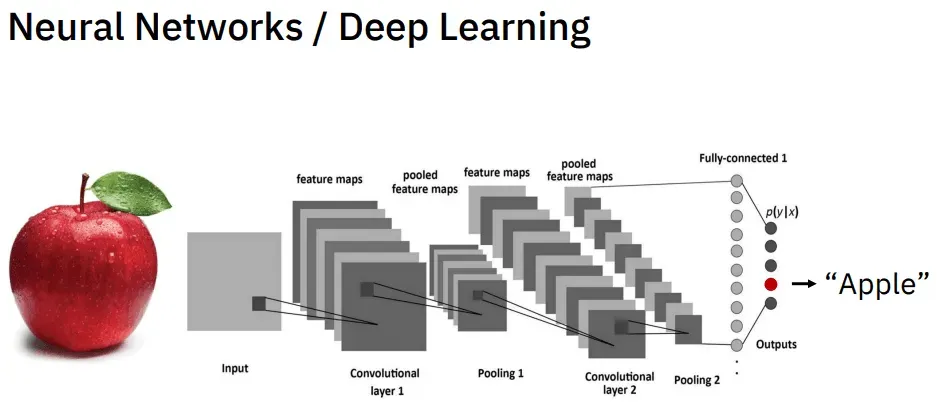
In a recent study, 66% of people could give at least a partial explanation of what AI is, in large part thanks to the popularity of OpenAI’s ChatGPT. But one downside of this latest AI boom is its focus on Large Language Models (LLMs), often at the expense of other avenues of research.
Neuro-symbolic AI combines neural nets, including LLMs, with symbolic systems like knowledge graphs to produce more reliable and transparent reasoning.
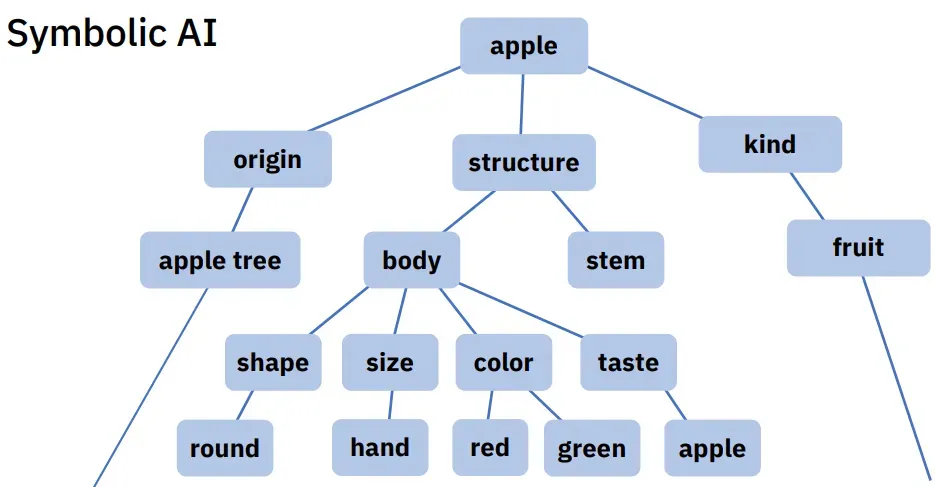
Symbolic AI is based on the idea that humans navigate the world by creating internal symbolic systems and logical rules for dealing with these symbols. It’s also the oldest model for AI, though it’s ‘fallen out of fashion’ in recent years, in part due to the surge in commercial prospects for LLMs.
Let’s backtrack a little…
Here’s a timeline of the development of artificial intelligence, from its inception in the 1950s to the rebirth of Symbolic AI in the 2010s.
1950s: AI was born in the mid-1950s with Symbolic AI, an effort to reproduce the neural patterns of the human brain within a machine.
1960s: By the 60s we had deep learning, the basis of modern LLMs. Though a non-learning recurrent neural network, the Ising model, was first built in the 1920s, multi-layer perception was not conceptualized until 1962. The first multi-layered deep learning model was built in 1967 by Soviet mathematician Alexey Ivakhnenko.
1980s: The 80s saw a direct challenge to Symbolic AI with a data-fuelled program that could learn to pronounce words in the same way that babies do.
1990s: Machine learning (ML) and deep learning developed throughout the 90s and 2000s, and Symbolic AI took a backseat.
2010s: Symbolic AI saw a resurgence in the 2010s with IBM’s Project Debater, which combined symbolic AI with probabilistic inference. It outwitted two (human) Jeopardy contestants & even trash-talked!
So AI is smart — but how do we make it sensible?
Researchers like Dan Gutfreund became convinced that the key to truly intelligent — even conscious — AI was common sense. It led him to a very specific avenue of research: babies
Recent studies of infant neural activity suggest that humans are actually born with an approximate understanding of the world already pre-programmed in our brains From there, we learn from data how to navigate the real situations we find ourselves in.
One way that researchers been able to recreate a child’s brain in an AI model is regarding object permanence. Through a combination of deep neural nets, symbolic AI & a probabilistic physics inference model, it learned to tell if an object should be visible after an obstacle was removed.
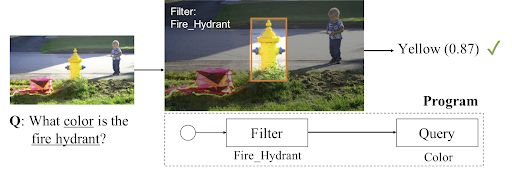
Another project, the Neuro-Symbolic Concept Learner, is being taught colors in the same manner that children learn to identify them. To begin with, the model didn’t know the concept of color, let alone the names of individual colors.
But now it can identify color with minimal prompting — it’s learned to perceive them.
What about LLMs?
Neuro-symbolic AI takes the best parts of LLMs and mitigates some of its flaws, like hallucination and computation costs.
It creates more transparent, trustworthy AI that’s better able to reason and generalize concepts.
What about math?
Google DeepMind is leading the charge on neuro-symbolic models for math.
The model, AlphaGeometry, working with DeepMind’s other model AlphaProof, is the first to reach silver-medal standard at the International Mathematical Olympiad (and were just 2 points off gold).
But it’s not just giants like Google and IBM that are leading the way in neuro-symbolic AI.
Here are 5 of my favorite neuro-symbolic AI startups from around the world that you should be paying attention to.
- Symbolica
By building “Reasoning Machines”, Symbolica want to create AI that is “controllable, interpretable, reliable, and secure.”
A combination of structured cognition & symbolic reasoning models “the multi-scale generative processes used by human experts.”
Check them out here.
- Extensity AI
Extensity is all about creating “AI-first workflows.”
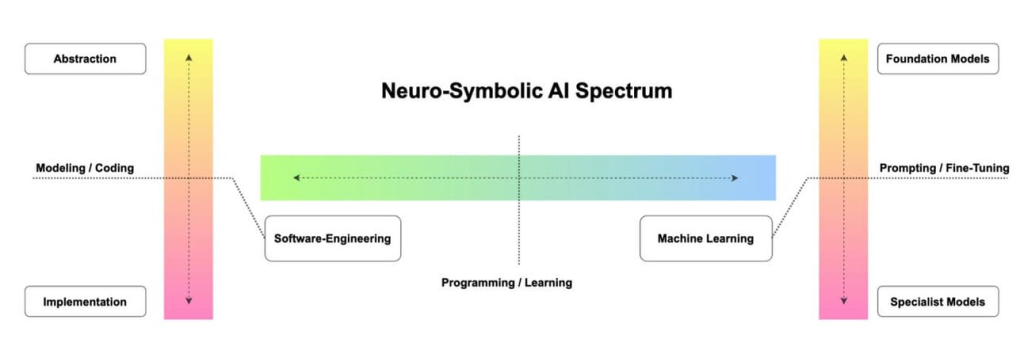
They’ve pioneered a Symbolic API that bridges the gap between classical programming & differentiable programming.
Check them out here.
- AnotherBrain
Taking a completely different approach is AnotherBrain’s Organic AI.
While deep learning was based on the brain’s neural pattern, Organic AI is macroscopic, “where large neuronal populations have a dedicated function. Ex: orientation and curvature detection.”
Check them out here.
- UMNAI
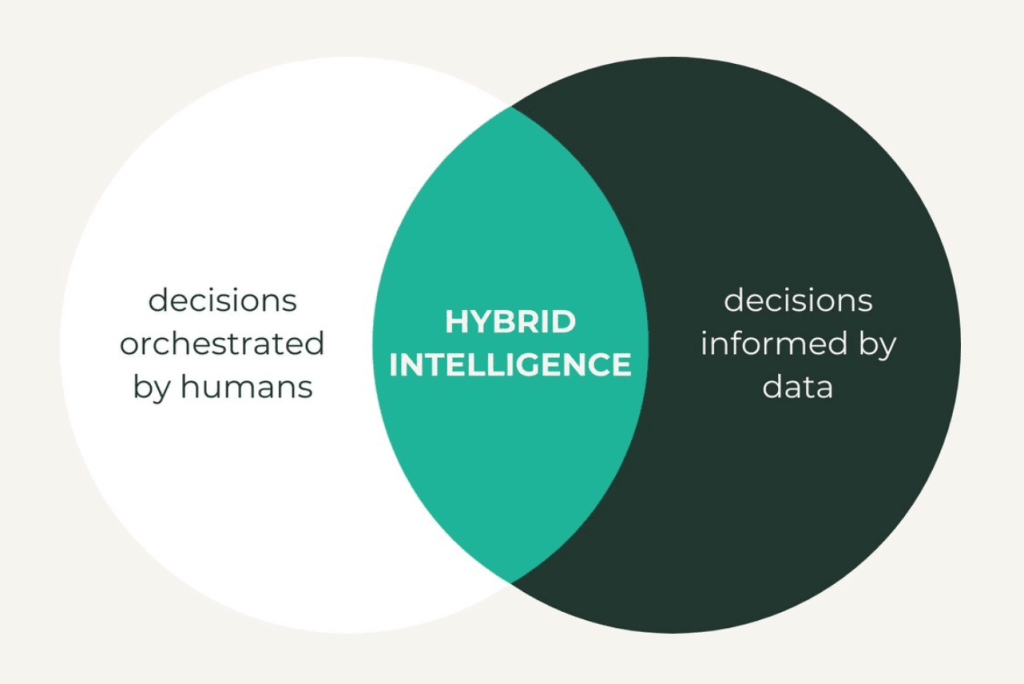
UMNAI’s XNNs are “transparent hyper-graph neural models organized and orchestrated symbolically, integrating the power of neural nets with the observability of symbolic logic.”
It tells you exactly how it reached its conclusion so you can check its logic.
Check them out here.
- Synfini
Combining neuro-symbolic AI with robotic automation, Synfini is speeding up drug discovery.
They’re combining “physical and virtual chemistry” for the “benefit of human health and longevity.”
Check them out here.






While the history of chance is fascinating, approaching gambling requires extreme caution and awareness of risks. Always prioritize responsible play before visiting playtime app. Remember that entertainment should never compromise your financial well-being or mental peace in this volatile industry.
What a wonderful experience from start to finish. The loyalty rewards actually mean something and the support staff goes above and beyond. I tell all my buddies about this spot. idcipit88
Aussie nights just hit different when you have a solid casino to unwind with. The table games here run smoothly and the dealers are always patient with new players. I love how they keep adding fresh tournaments that make every session feel like an event. aukangaroo88casino
Logging into phjewellogin is so quick and secure thanks to their two factor authentication system. I love the jewel themed games because they are colorful and offer great payout ratios. Support staff are always polite and guide you step by step when you need to verify your account for the first time. phjewellogin
I have tried many slots but this one has the best hit rate so far. The jackpot feels attainable and the vibe is just right. mpo303slot is my new favorite spot.
Really impressed with the win rates on this site. It feels fair and the rewards are distributed quite generously. xs777game
I really like the layout of this site and how intuitive it is for new players. I had a blast playing on br5542bet last weekend.
Great experience so far. The gameplay is lag-free and the graphics are top notch. If you are looking for excitement, pk21pk is the place to be.
Hey everyone, I just stumbled upon this amazing platform and I have to say the gaming experience here is totally top notch. The interface is super smooth and customer support actually replies fast. If you are looking for a reliable spot to spin some slots, definitely give it a try. bdpinupcasino
The stability of the site is top notch. I haven’t encountered any glitches so far which is a rare find. Keeping my account at mm33login for sure.
I’ve tried a few platforms lately but this one really stands out. The games are smooth and the payouts are fair. Highly recommend checking out 311jiliparkcasino for a great experience.
[9947]ck222 লগইন এবং অ্যাপ ডাউনলোড | বিকাশ দিয়ে ক্যাসিনো ডিপোজিট,ck222 সাইটে লগইন করে অনলাইন স্লট গেম খেলার নিয়ম জানুন এবং সহজে অ্যাপ ডাউনলোড করুন। দ্রুত বিকাশ দিয়ে ক্যাসিনো ডিপোজিট করে গেম শুরু করুন। visit: ck222
Finally found a place that doesn’t lag during peak hours. The user experience is top notch. Big thanks to bdje7777 for the great service.
Solid platform with a very professional feel. The registration process was a breeze and I started playing within minutes. Great job by the br0055bet1 team.
Really impressed with the variety of games available here. I had a great run last night and the customer support was very helpful. Give vnk88win a try!
Finally found a place that actually pays out without a headache. The interface is very user-friendly and the games are top notch. Check out suksesjitulogin if you want a reliable experience.
Excellent explanation throughout the article. We appreciate the chance to introduce <a href=”https://heylink.me/cuancash88top/”>CUANCASH88 LINK LOGIN</a> to a wider group of readers.
[1617]Crikes: বাংলাদেশ অনলাইন ক্যাসিনো গেমস,অ্যাকাউন্ট খুলুন এবং লগইন করে অনলাইন ক্যাসিনো গেম খেলুন বাংলাদেশের খেলোয়াড়দের জন্য Crikes। প্রমোশন এবং ভিআইপি তথ্য যাচাই করুন। visit: crikes
Best gaming experience I’ve had in a while! The interface is super intuitive and I love the variety of games. Check out pk21game if you want a reliable platform.